Waitangi
Today is the/a national holyday: Remembering the significance of the Waitangi Treaty, signed on 6 february 1840.
The path to this treaty started long before that. One of the important stepping stones was the Declaration of Independence: He Whakaputanga o te Rangatiratanga o Nu Tireni, signed in 1835. This is the official Declaration of Independence and sovereignty of Māori over the lands, known as Nu Tireni or Aotearoa New Zealand. It says, that the the Chiefs of the Confederation of the United Tribes of Nu Tireni declare New Zealand an independent state. Their sovereign powers will be held by the collective chiefs of the land. The Māori will hold congressional meetings every autumn in Waitangi. And finally, a copy of the Declaration will be shared with the King of England.
In 1840, this declaration got a follow up by the Treaty of Waitangi. Hundreds of Māori came to discuss the concept of that treaty. Rangatira (chiefs) coming from as far as Ngāti Tūwharetoa. The discussion – for and against signing – carried on through day and night. At 6 February about 40 chiefs were ready to sign. Copies of Te Tiriti o Waitangi were sent around the country for signing. By September, approximately 540 chiefs did. Many did not, but the Colonial Office considered they had the ‘free and intelligent consent’ from Māori leaders.
As it seems, there are significant differences between the English and te reo Māori texts about sovereignty, possession of lands and other things, leading to a lot of tensions after the signing. Within five years, the New Zealand Wars had begun with the Battle of Kororāreka, going on for deceades. By 1867, finally, Māori were granted four seats in the parliament. From there, they grew stronger. In 1975, the Treaty of Waitangi Act saw the light of day, which resulted in the formation of the Waitangi Tribunal. The Tribunal has heard and settled claims ever since, a crucial part of Māori’s struggle and resilience of their ancestors.
Waitangi Day now is an acknowledgement of New Zealand’s past and signals what the Treaty can mean today.
Since 1940 (a few years after Lady and Lord Blesdisloe bought and granted the ground of Waitangi to the public), the place really refound respect for its significance to the country. Until then, only Māori, it seemed, achknowledged the significance of the place. In 1878 local tribes wanted to set up a meeting house, but the Government refused. The Bledisloes gifted Waitangi to the nation at a hui attended by thousands on 6 February 1934 – the first Waitangi Day, New Zealand’s national day.
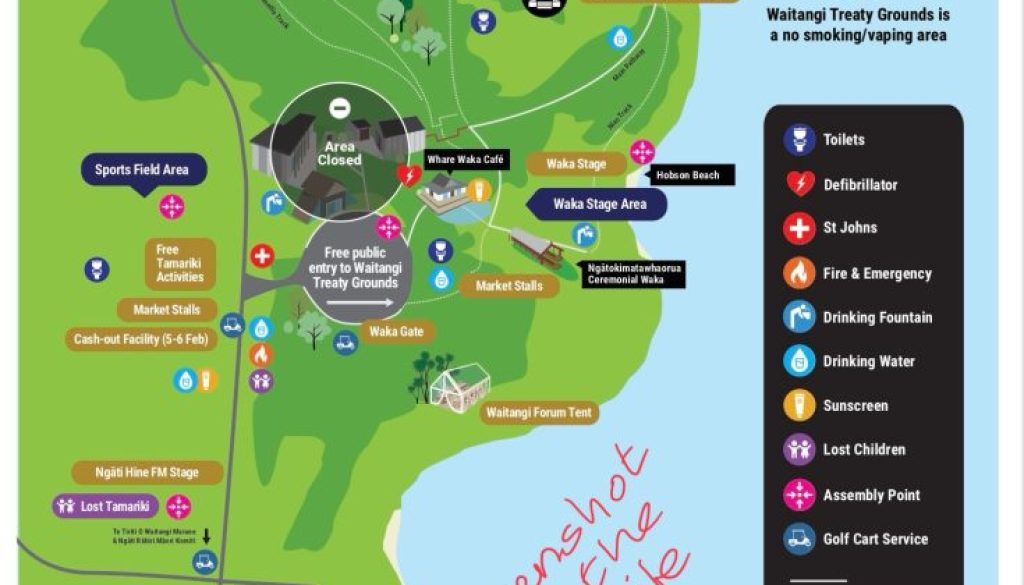
By now, a festival is held at the grounds (about 6ha!), for mostly a week. Formal gatherings, usually a visit from the prime minister at the 6th, markets, music, plays, disputes… quite an occation!
Elswhere in the country, it mostly seems to be ‘BBQ and beaches’.